


Real estate website as a reflection of the users’ decision making journey


written by
In real estate, as elsewhere, customer centric approach is the key guideline in the process of designing and maintaining a website. Putting the needs and wants of the customer in the centre of the business is critical for delivering value, relevant content and designing experiences that will be memorised.
Ok, first step successful: they’ve landed on the website. Where do they go next? Our mission is to attract their attention and pass messages key for the sales/business and useful to them. But their needs are different. The answer is in what they see, how they interact and what do they read.
This approach demands that the content needs to be addressed with equal attention as website design. It is not something you “fill in later”—it’s a critical tool in driving leads and guiding users from interest to inquiry.
In this article we’re sharing the perspective on how website could provide answers to user needs at each step in their journey.
Awareness stage (Interest)
In the first stage, after an ad or a friend has brought to their attention, potential buyers are just starting to explore options—their attention needs to be kept with attractive design that is representing the brand promise, they need credibility and reassurance early on, especially when exploring high-investment products like real estate.
One of the first goals for the website: keep the promise potential buyer saw in the ad or heard from the referral, attract their attention and inform them further about the offering
Make it easy to find what interests potential buyers
Firstly, navigation. It can’t be predicted what a potential buyer would like to explore after the Home page. In the process of creating a website we can assume and offer a path, but it’s hardly likely it will be exactly what was expected for so many different personas.
A well-structured site that communicates clearly from the first scroll helps users stay longer and explore deeper. Even early-stage visitors need intuitive language and a strong narrative to understand what the development is about and how it differs from others in the market.
Content affects visibility—especially in search
At the stage when buyers are discovering they’re also googling general terms like “properties in [city]” or “new developments near me.” They’re looking for other developments to compare, so they can evaluate the value and prolong their interest or just move on. SEO-optimized content ensures your project or business appears in their search results and sets the first impression.
Without clear, search-ready content, you’re invisible to early-stage buyers.
Content isn’t just filler—it’s part of the design
Words, images, videos, micro interactions and animations are integral parts of the impression user will have during their browsing through the website. It’s obvious when brand voice works with the visual identity envisioned for the brand and on the other hand- when they aren’t harmonious/detached.
How is this reflected on the website?
Even if there is significant number of pages on the website, clear navigation and intuitive grouping could enable the user to explore the website easily and in their own piece.
Transparency about the development company, their certifications, licenses, and track records are just some of the pieces of the picture potential buyers might find valuable in the Discovery phase. Press coverage, awards, and recognitions add another level of reliability. Client testimonials or case studies from past developments contribute to the overall impression potential buyers can make about the company behind the subject of their investment.
Consideration stage
At this point, potential buyers are comparing and evaluating different projects. From property features, over neighbourhood and amenities details to the price calculators and items included in the price. Well-produced, strategic content moves buyers from “maybe” to “I’d like to learn more.”
The main goal at this stage: provide information, educate and help potential buyers compare, evaluate, and build confidence in your offer.
You’re not just selling properties—you’re selling a vision of the future
This is where multimedia comes in: lifestyle videos, location overviews, and neighbourhood and amenities presentations help emotionally anchor the project in a buyer’s mind and distinguish it from other developments.
Real Estate is visual, but great photos alone won’t sell
Once users land on the site, they start learning about the offering. Eye-catching imagery may pull them in—but it’s the clear, persuasive copy that explains project USPs, legal details and pricing options help them make conclusions and move towards next stage.
How this reflects to the website?
Mastering property presentation is the critical at this stage. Online experience should reflect the presentation from the Sales representative in direct communication.
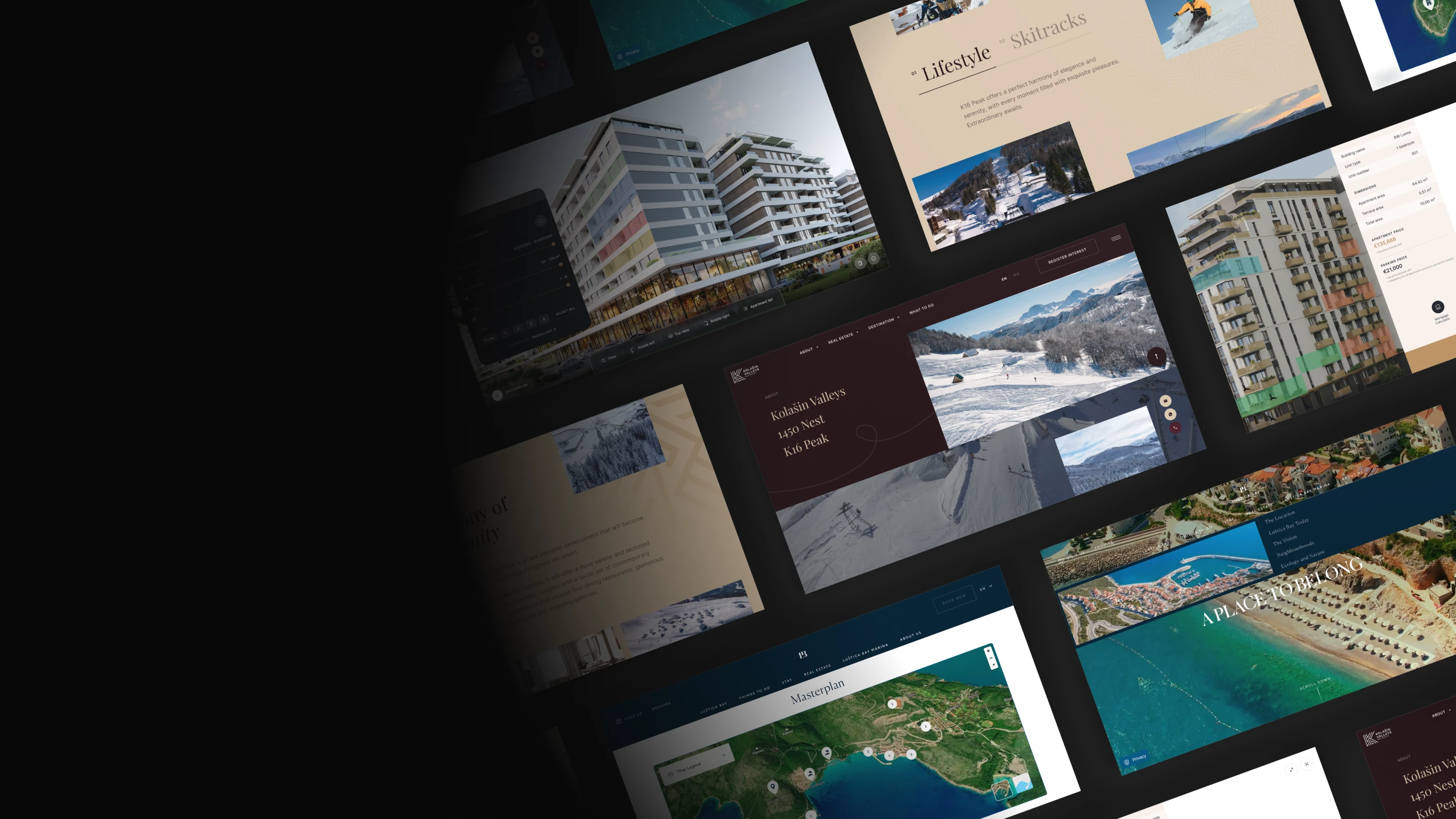
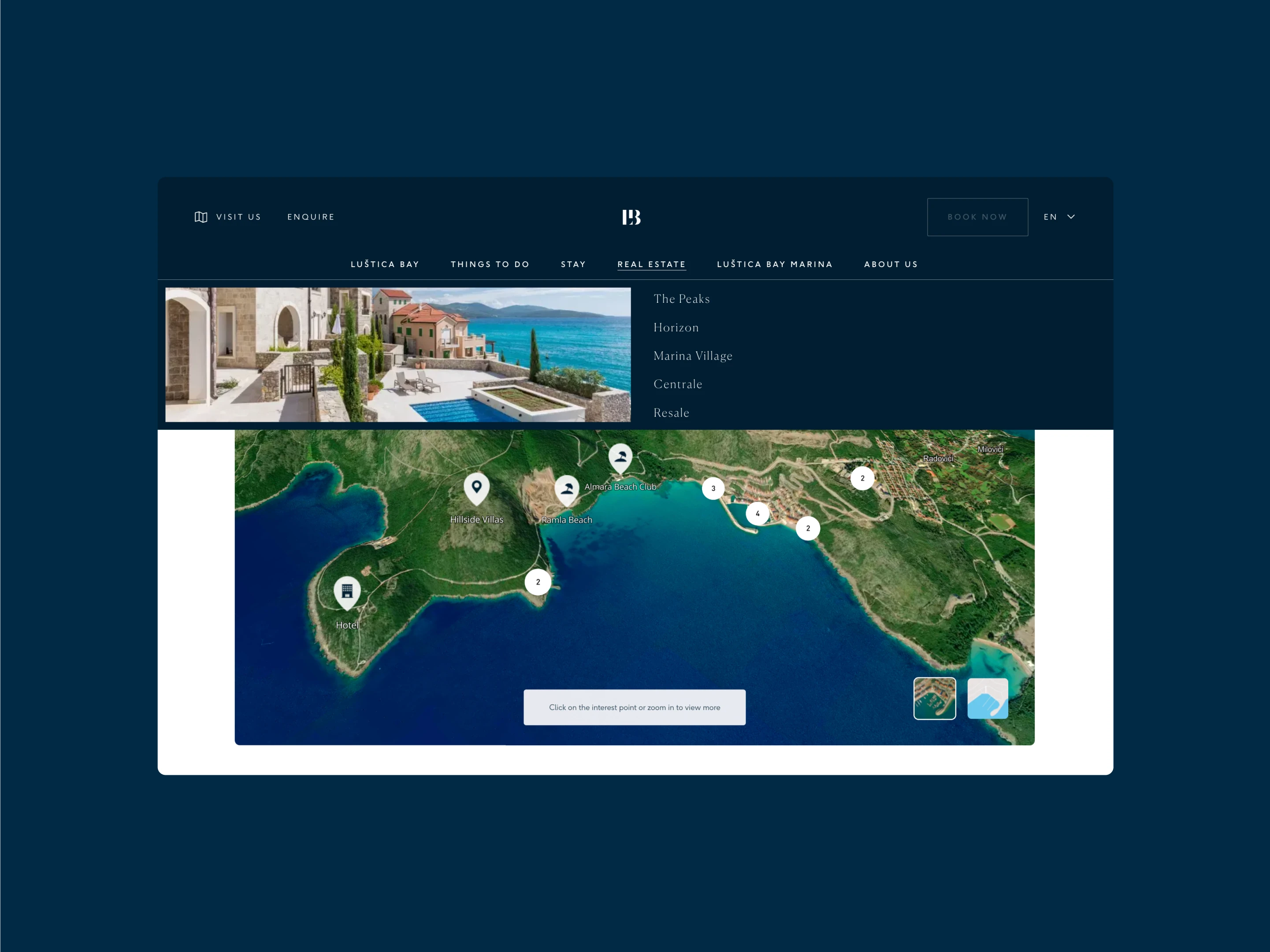
Provide more details about everything that might be relevant to the various buyer personas like investors or first time homeowners: side-by-side unit comparisons, clear pricing tiers, and ROI/rental yield estimations, interactive masterplans and neighborhood insights (schools, transport, amenities), floorplan downloads, and brochure requests.
Propellyst
Kolasin single page vizual
https://cdn.dribbble.com/userupload/8541155/file/original-9d23c0fce4959e4ec62c6b832b83012d.mp4
Related project
(GET STARTED)
We are eager to build a cohesive digital world for your ideas. Drop your details below and watch your vision takes shape.